The Strong Mask: Why Others' Weakness Irritates You
A colleague goes quiet in a meeting, a friend tells you they can't cope any more, and instead of compassion you feel a flicker of irritation: “come on, it's not that bad.” If that reaction feels familiar, you may have spent years wearing a strong mask. Here is what it hides, why other people's weakness gets under your skin, and how to loosen it without feeling exposed.
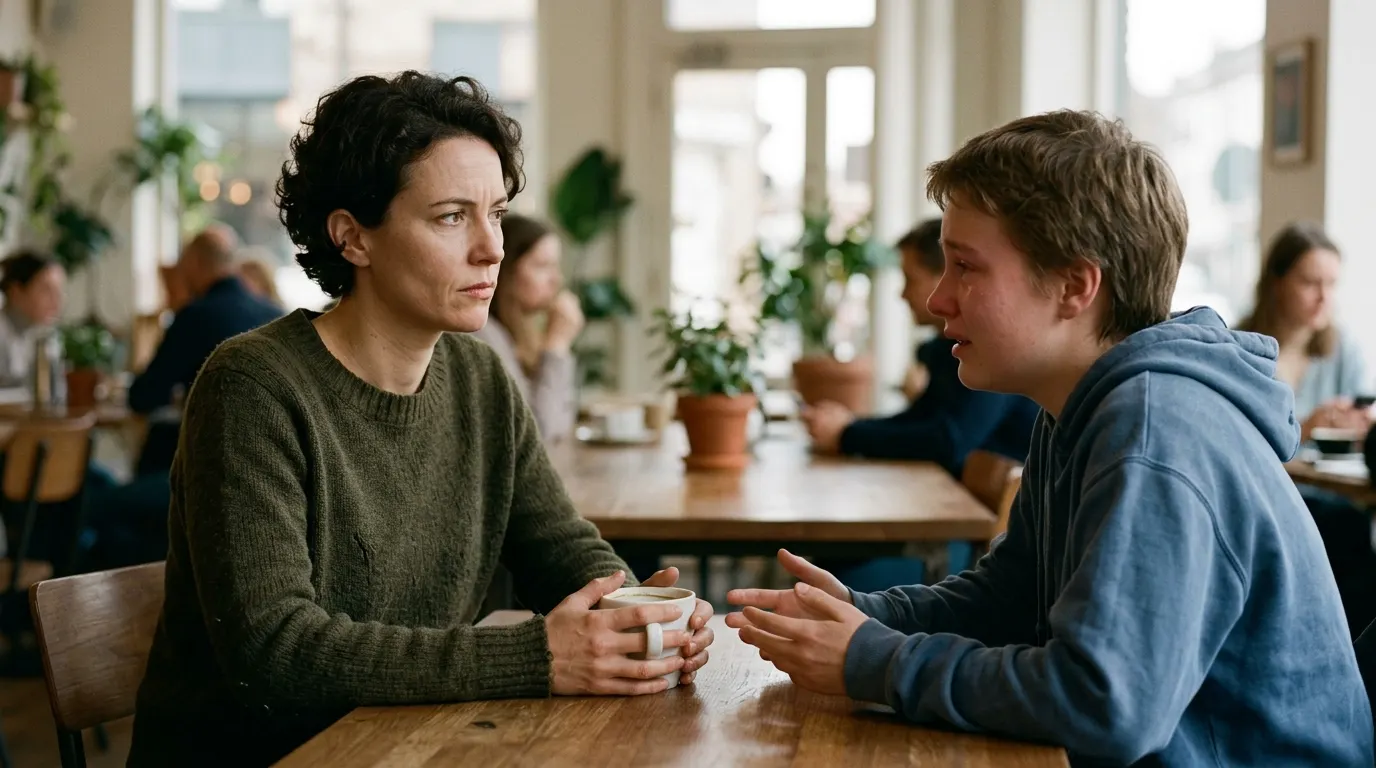
What is the strong mask and what does it hide?
The strong mask is a role people adopt to feel safe: the person who can handle anything, needs nobody and always has a solution. It works as a defensive identity rather than an inborn trait, and it usually settles in when showing need came at a price, such as nobody responding, being criticised for it, or having to look after others too early. In the role-and-shadow framework, every role leaves its opposite out of sight. What stays in the strong person's shadow is vulnerability: getting tired, doubting, asking for help, crying or not knowing. That part does not disappear because you ignore it; it keeps acting out of view, especially in how you react to people who do allow themselves to show it. This is a symbolic framework for personal reflection, useful for looking at yourself with curiosity, not a clinical label or a diagnosis.
The mask has a kind side, because real strength exists and is valuable. The problem is not being strong but being unable to stop. When the role stops being a choice and becomes the only possible response, we are talking about rigidity. You can spot it in inner sentences such as “I'll manage,” “I don't want to bother anyone” or “if I show I'm struggling, I'll let someone down.”
To place this role on the full map, it helps to read what role and shadow mean in your personality first, where the two halves and their relationship are explained.
Why does other people's weakness irritate you?
Because someone else's vulnerability touches exactly what you have forbidden yourself. In the Jungian tradition, what you reject in yourself tends to be projected outward, which is why a person wearing the strong mask reacts with irritation, impatience or contempt toward someone who cries, doubts or asks for help. It is not that the other person is doing something wrong: their behaviour acts as an uncomfortable mirror that reminds you of a part of yourself you have been silencing for years. The most reliable sign is disproportion. If an ordinary complaint sets off a reaction far bigger than the situation deserves, you are probably not talking only about that person. Treat this reading as a hypothesis to explore, not a universal truth, and remember that not every annoyance is projection: sometimes someone really does cross a legitimate boundary, and your anger is healthy information about you.
A practical clue: notice the judgement that shows up. “So dramatic,” “so weak,” “just pull yourself together” are sentences that are rarely about a situation; they are about what the situation stirs up. If you recognise them, do not punish yourself. That is the mask doing its job, shielding you from an old hurt.
The same mechanism appears, in another disguise, in why you keep trying to fix other people: instead of irritation there is an urge to solve, but the root can be the same.
How can you tell real strength from the strong mask?
Real strength is flexible and the mask is compulsory. A person who is genuinely strong can hold a difficult situation and, when they need to, also ask for help, rest or admit they do not know, without feeling their worth drops. Someone wearing the mask cannot allow any of those three things: doing so would bring shame or a sense of threat. Another useful difference is the relationship with other people's weakness. Real strength receives it calmly and can even keep it company; the mask judges it, avoids it or rushes to fix it. Finally, the aftermath differs. After acting from authentic strength you usually feel tired but at peace; after holding the mask you get exhaustion, quiet resentment or a private collapse when nobody is looking. None of these clues is a definitive test, but together they give you a clear map for observing your own behaviour honestly.
| Situation | Flexible strength | Strong mask |
|---|---|---|
| You are exhausted | You admit the limit and rest | You push on and deny it |
| Someone asks for support | You listen without feeling threatened | You fix it fast or get irritated |
| You need help | You ask naturally | You would rather owe nobody |
| You make a mistake | You own it and move on | You hide or downplay it |
| Afterwards | Calm tiredness | Resentment or emptiness |
Illustrative case (composite, not a real testimonial): Marcus always organises family dinners, solves everyone's last-minute problems and never says when things are going badly. When his sister admits she is going through a rough patch, he tells her to “cheer up” and changes the subject, then spends the evening irritated without knowing why. Later he realises it was not his sister that bothered him, but that she allowed herself something he did not.
What does holding the strong mask cost you inside?
Holding the mask uses a lot of energy, because it demands constant self-monitoring: controlling what you show, staying quiet about what you feel and anticipating what others need. Over time it tends to bring three recognisable costs. The first is loneliness: if you never show what is happening to you, others cannot keep you company and your support network becomes one-way. The second is resentment, which appears when you give a lot and receive little, even though you have avoided asking. The third is exhaustion, because the role allows no rest and you accumulate tiredness with nowhere to go. Your manner with more expressive people can also harden, which wears down relationships you care about. None of this means you are broken; it means a strategy that once served you now costs more than it gives. If the discomfort is intense or long-lasting, talking with a qualified professional can be a good support.
These everyday signs often go along with that cost:
- You struggle to accept a gift, a favour or a compliment without returning it straight away.
- When someone asks “how are you?” you answer “fine” before checking whether it is true.
- Resting makes you feel guilty, and getting ill makes you annoyed.
- You are more comfortable giving support than receiving it.
If you want to see how these patterns appear across different areas of your life, there is a wider list in signs of role and shadow in everyday life.
How can you start showing vulnerability without feeling exposed?
You start small, with safe people and in doses you can hold. Showing vulnerability does not mean telling everything or falling apart in front of anyone; it means letting a real part of you be seen without full protection. A good first step is replacing the automatic “I'm fine” with a truer but short sentence, like “I'm tired today,” said to someone you trust. The second step is asking for something small, such as a simple favour, and noticing how it feels inside without correcting it. The third is observing what happens next: almost always the world does not collapse, and that evidence gradually loosens the belief that needing is dangerous. Go at your own pace and choose whom to show, because opening up is not the same as exposing yourself without judgement. The aim is not to abandon strength but to stop it being your only way of being.
A mini-exercise for this week, step by step:
- Pick one safe person. Someone who has already treated you well when you were struggling.
- Write one small, true sentence. For example: “This week is costing me more than I let on.”
- Say it without justifying it. No over-explaining and no apologising.
- Watch your body. Notice tension, heat or the urge to change the subject, and breathe instead of escaping.
- Write down the result. What you expected and what actually happened.
When that goes well, try holding other people's vulnerability without fixing it: listening for two minutes without offering advice is already training. For broader integration practices see how to work with your role and shadow, and for a general foundation in self-observation you can read how to know yourself.
If you want to see which defensive role dominates in you and what stays in your shadow, take the free role and shadow test and take away a concrete starting point for observing yourself.
❓ Frequently Asked Questions
Is being a strong person a bad thing? ▼
No. Strength is a valuable resource. The difficulty starts when it becomes a compulsory role and you cannot rest, ask for help or admit you do not know. Healthy strength leaves room for vulnerability; the mask treats vulnerability as a threat and forces you to hold the role at all times.
Why do people who complain a lot bother me? ▼
There may be legitimate reasons, such as exhaustion or crossed boundaries. But if the irritation is out of proportion, that person may be showing something you forbid yourself: needing, complaining or asking for support. Notice how intense your reaction is and ask what is stirred up in you before judging.
Does vulnerability mean telling everyone everything? ▼
No. It means letting a real part of you be seen by people who have earned it, in doses you can hold. Sharing tiredness or asking a small favour is already a big step. Choosing carefully whom to open up to is part of the process, not a contradiction of it.
How do I know if this mask is why I struggle to ask for help? ▼
Look for shame, guilt or a sense of threat when you need something, a preference for never owing favours and an automatic “fine” as your answer. Also notice if giving is easier than receiving. No single sign is definitive, but several together suggest the strong role weighs more than you realise.
Does this replace professional support? ▼
No. This content is informational and for self-exploration, not a diagnosis or therapy. If exhaustion, loneliness or irritation overwhelm you or persist over time, talking with a qualified professional can give you the kind of personal, ongoing support that an article on its own cannot offer.
- The strong mask protects, but it leaves vulnerability out: tiredness, doubt and asking for help stay in the shadow.
- Disproportionate irritation at other people's weakness is often a clue to what you have forbidden yourself, not a flaw in them.
- Real strength is flexible; the mask is compulsory and tends to end in resentment or exhaustion.
- Showing vulnerability is practised in small doses with safe people, without exposing yourself indiscriminately.
- The goal is not to stop being strong but for strength to be a choice rather than your only way of being.
References and Bibliography
Selection of sources used as conceptual background for this article.
- American Psychological Association. (2020). Publication manual of the American Psychological Association (7th ed.).
- World Health Organization. (2022). World mental health report: Transforming mental health for all.
- Ryan, R. M., & Deci, E. L. (2000). Self-determination theory and the facilitation of intrinsic motivation. American Psychologist, 55(1), 68-78.